

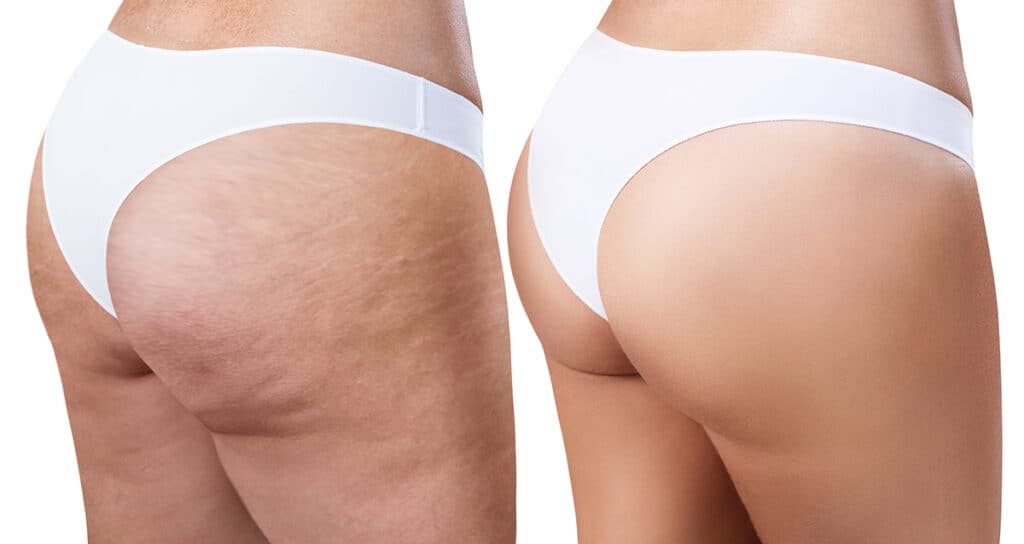
Some procedures can make cellulite less noticeable, but reducing fat is not the same as treating skin dimpling. The best starting point is an examination to distinguish cellulite from loose skin and localized fullness, followed by a realistic discussion of the improvement a particular treatment might provide.
Cellulite, fat and loose skin are different concerns
Cellulite involves dimples associated with connective tissue beneath the skin. A person can have cellulite without wanting or needing to lose weight. Removing a pocket of fat does not automatically smooth the skin over it, and a skin-tightening procedure is not interchangeable with a cellulite treatment. The American Academy of Dermatology reviews these differences and treatment evidence.
For a useful consultation, describe the change you want to see. Is it a smaller bulge, less rippling, firmer-looking skin or a combination? Those are different goals, even when they occur in the same area.
Which approaches may improve dimpling?
Some treatments release the connective bands responsible for individual dimples. Others use laser or acoustic energy. The AAD describes evidence of improvement with several approaches, including subcision, but results and duration vary. Radiofrequency treatments may offer more limited, temporary improvement and can require repeat sessions. No approach should be presented as a guaranteed cure.
Cellfina is one example discussed in the AAD’s overview, not a statement that every practice currently offers it. Ask which treatments are available now and which are appropriate for the particular area you want evaluated.
How this relates to our body-contouring services
Our body-contouring page is a starting point for discussing the practice’s options. During your visit, ask whether the proposed treatment is intended to address fat, skin laxity or cellulite, rather than assuming one treatment will correct all three.
Renuvion/J-Plasma should not be described as a noninvasive cellulite treatment. FDA-cleared uses depend on the specific handpiece and procedure. The APR handpiece has indications involving loose neck and under-chin skin and tissue coagulation following liposuction. These are not blanket clearance to treat cellulite anywhere on the body. See the FDA’s Renuvion/J-Plasma safety communication.
Questions that help compare treatment plans
- What is causing the texture I want to improve?
- What exact device or procedure are you recommending?
- Is this an incision-based procedure or a treatment performed on the skin?
- What improvement is realistic for my skin and treatment area?
- How many sessions, follow-up visits and maintenance treatments might be needed?
- What recovery time and total cost should I plan for?
Ask about risks rather than assuming that a nonsurgical treatment is risk-free. The FDA’s body-contouring guidance notes possible pain, redness, swelling, bruising and other complications that vary by technology. Results may be temporary or fall short of the intended change. Tell your clinician about your medical history and prior procedures before selecting a treatment.
Frequently asked questions
Will fat removal automatically get rid of cellulite?
No. Localized fat and cellulite are different concerns. A treatment that reduces a bulge may not improve skin dimpling.
Can cellulite treatment guarantee completely smooth skin?
No. Treatment may reduce the appearance of cellulite, but the amount and duration of improvement vary.
Is J-Plasma a noninvasive cellulite treatment?
No. Renuvion/J-Plasma procedures and their cleared uses depend on the handpiece and treatment plan. It should not be described as a noninvasive treatment guaranteed to remove cellulite.
How do I find out which treatment is appropriate?
Have the area examined and discuss your goal, the proposed procedure, realistic results, risks, recovery and current treatment availability.
Plan a consultation in Sacramento
Learn about Dr. Hause or request a consultation with Sacramento Aesthetic Surgery. Call (916) 646-6869 to discuss scheduling. This information is educational and does not replace an individualized evaluation.