

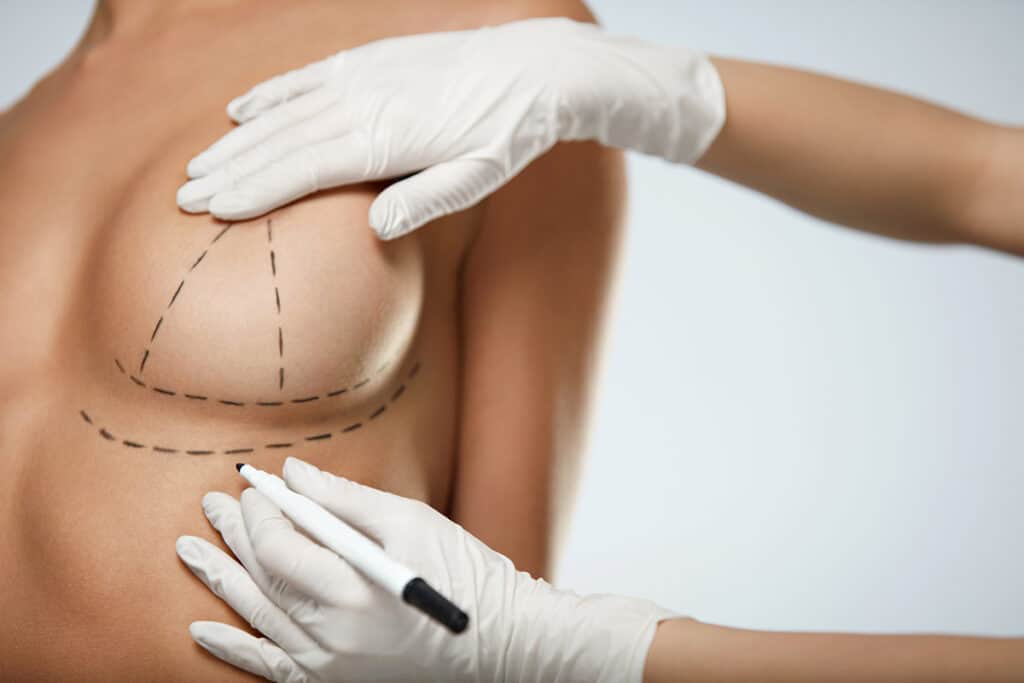
A breast lift is usually performed to change breast shape and position, not to treat a medical condition. Sagging alone, or a home test involving a pencil beneath the breast, does not establish medical necessity or insurance coverage. The useful first step is separating an appearance concern from symptoms that deserve a medical evaluation.
What a breast lift actually changes
A breast lift, also called mastopexy, reshapes the breast and removes excess skin. It does not necessarily make breasts substantially smaller or larger. Size, upper-breast fullness and position are separate goals, so a lift, reduction or augmentation may be discussed for different reasons. The American Society of Plastic Surgeons explains these distinctions.
Our Sacramento breast lift page describes techniques Dr. Hause discusses with patients. An incision pattern should be selected after an examination, not from a photograph or a self-assigned grade of sagging.
When symptoms deserve a separate discussion
If breast weight contributes to neck, shoulder or back discomfort, limits activities, leaves bra-strap indentations or causes irritation beneath the breast fold, tell your clinician. These concerns can be relevant to a breast reduction evaluation. They do not automatically mean a breast lift is the appropriate treatment. ASPS discusses these symptoms in its breast reduction guidance.
Bring a clear account of what bothers you: whether the issue is discomfort, skin irritation, size, position, asymmetry or a combination. Note how it affects everyday activities and any treatment you have already tried. This helps keep the consultation focused on your needs rather than on a particular procedure name.
Will insurance cover a breast lift?
Most health insurance plans do not cover cosmetic breast lift surgery, according to ASPS. Breast reduction and reconstructive circumstances are different questions. ASPS notes that reduction surgery may require insurer approval.
Ask your insurer about your own plan and ask the practice which services it provides and how payment is handled. Do not assume that a symptom, diagnosis or consultation guarantees coverage. Request a written estimate that makes clear which procedure is proposed and which costs are your responsibility.
What to discuss at your consultation
- Is my main concern shape, volume, breast weight or a symptom needing further evaluation?
- Would a lift alone meet my goal, or should another approach be discussed?
- Where would incisions and scars be located?
- What restrictions would affect work, lifting, exercise and family responsibilities?
- How could future pregnancy or weight changes affect the plan?
- What costs and follow-up visits should I prepare for?
A lift is surgery. Risks include bleeding, infection, healing problems, changes in sensation, asymmetry and the possibility of further surgery. Your individual risks should be discussed directly with your surgeon. See ASPS breast lift safety information.
You can learn about Dr. Hause and review the practice’s patient photo gallery before your visit. Photographs illustrate individual experiences, not a guaranteed outcome.
Frequently asked questions
Does breast sagging make a lift medically necessary?
No. Sagging is an appearance-related finding and does not, by itself, establish medical necessity or insurance coverage.
Can the pencil test tell me whether I need a breast lift?
No. A home test cannot evaluate your health, determine the right operation or establish insurance coverage. A consultation is needed to discuss your concerns and options.
Is a breast lift the same as breast reduction?
No. A lift focuses on shape and position, while reduction removes breast tissue to reduce size. Your goals and symptoms help guide which approach is discussed.
Will I need implants with a breast lift?
Not necessarily. Whether to discuss implants depends on your anatomy and volume goals. A lift does not automatically require augmentation.
Discuss your goals with Dr. Hause
For an individualized discussion at Sacramento Aesthetic Surgery, request a consultation or call (916) 646-6869. This article provides general education, not a diagnosis or a determination of insurance eligibility.